
A backyard view of a major infrastructure project.

14 Street S.W. Reconstruction – Anderson Road to Canyon Meadows Drive S.W.
https://www.calgary.ca/planning/projects/14-st-sw.html
I spend a lot of time sitting on my back deck when the weather starts to warm up, and so I was happy to see the warmer temperatures that spring was bringing us.
That came to an abrupt halt on April 26th, which is when a portion of the 14th Street reconstruction project started only fifty feet away from where I would sit every day to sit, smoke, and ponder life’s mysteries. I have spent many hours out there writing, finding my juju and getting into a groove that can see me hammer out page after page. Unfortunately the cacophany that arose from the construction site that was only a few meters away from my back deck wasn’t conducive to finding one’s juju.
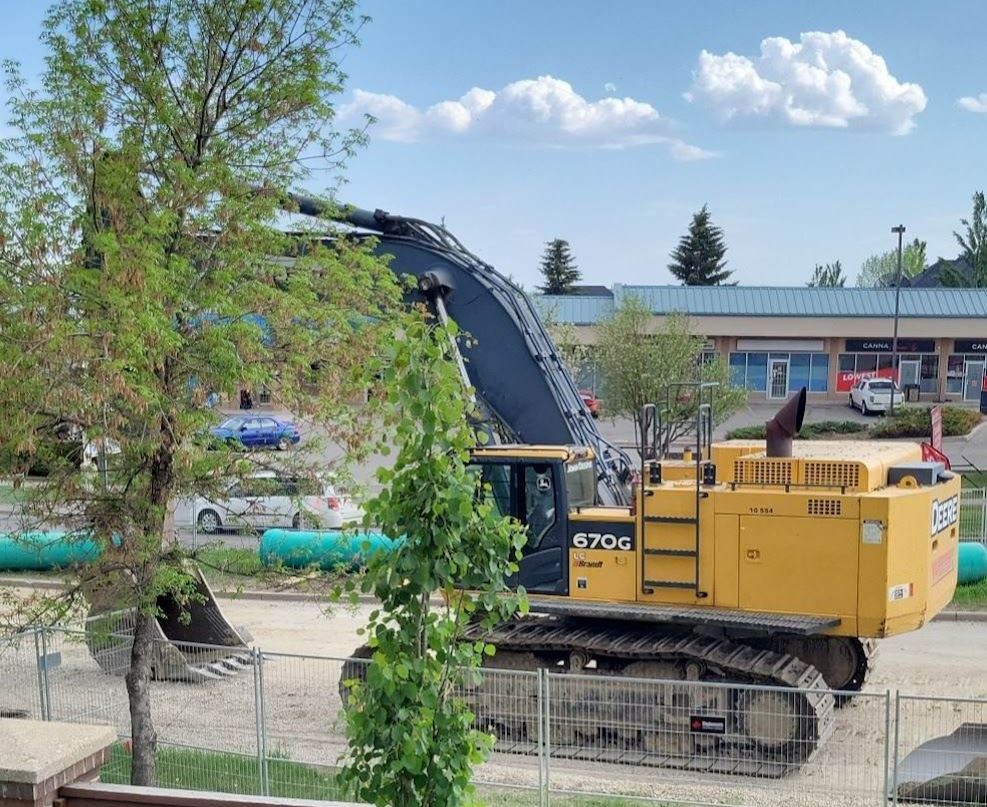
So, I thought that I might make some lemonade out of this rather loud and smelly lemon, and share with you some of the sights and sounds of the last couple of months. It was a unique opportunity, to have balcony seats to see a construction project unfold only feet away, and I found myself somewhat entertained by it all. For a lot of guys, it would be almost like being in a big sandbox and playing with Tonka trucks like we used to when we were kids, only with way bigger and much cooler machines.
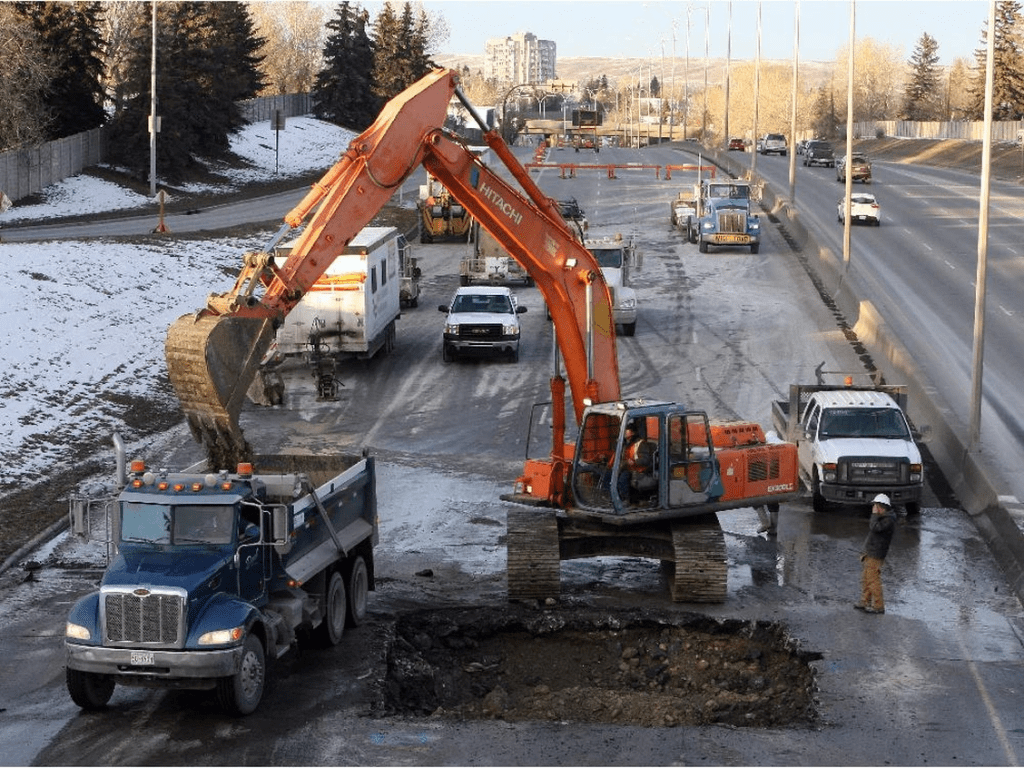
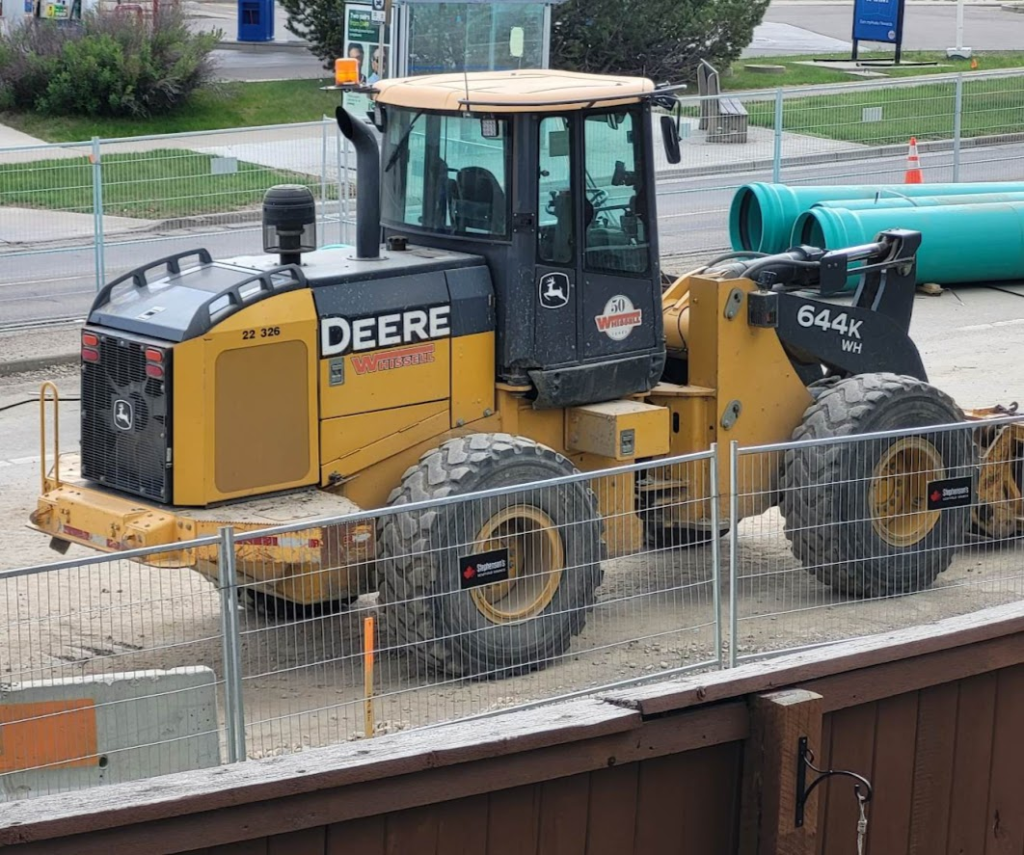
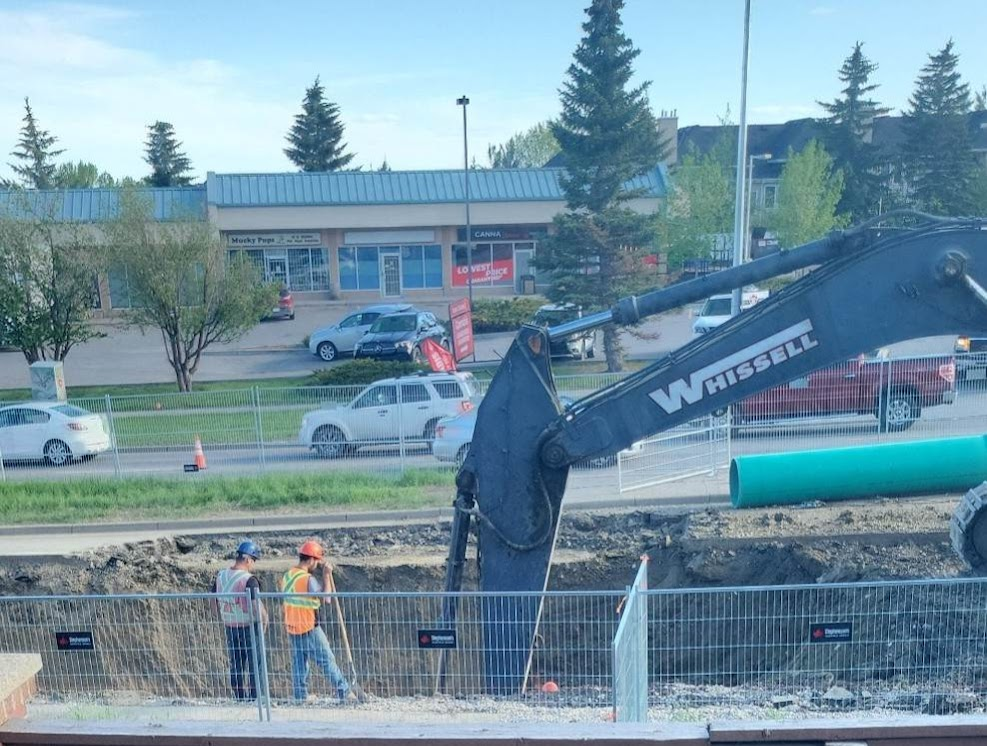
The track hoe from hell.
The purpose of the project was to install new pipes beneath Canyon Meadows Dr., starting about 150 m east of me and ending up about 150 m west of the intersection of Elbow Dr. and Canyon Meadows Dr., leaving behind freshly paved asphalt. To top it off they would be doing the work WITHOUT having to shut down a vital intersection.
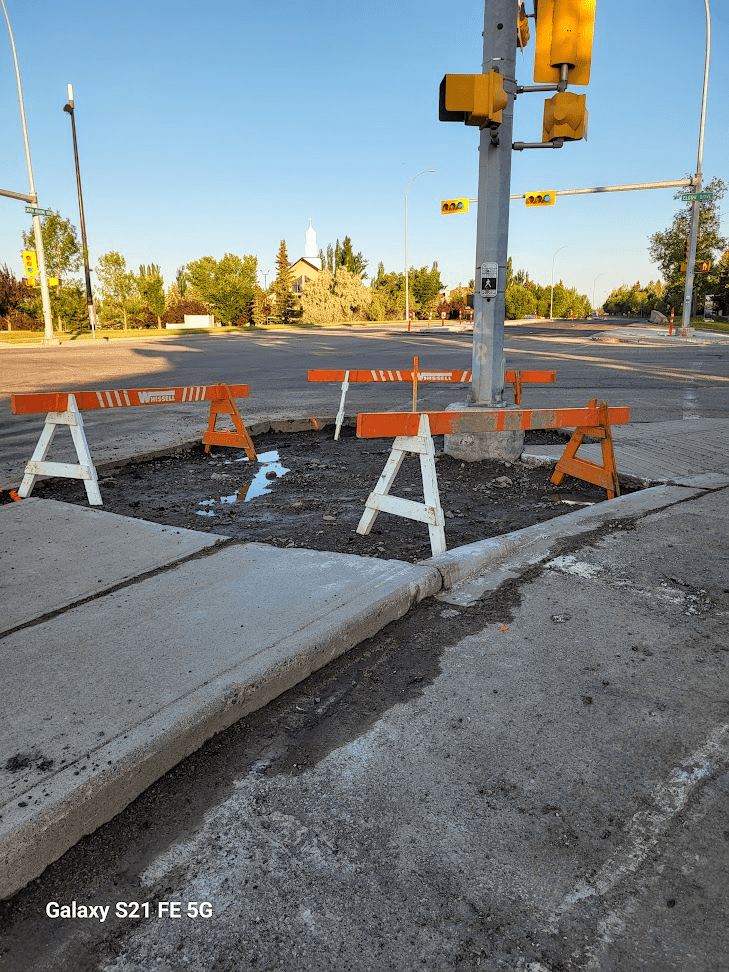
It was by no means perfect however, as the intersection became more dangerous because of the way that it was blocked off, in particular the construction fence that completely obscured the view of westbound drivers who were turning north onto Elbow. Pedestrians absolutely needed to keep their wits about them as there was routinely no flagger on duty to control traffic. Unless vehicles or equipment were moving from the west side of the site across Elbow to the east side, there would be no flaggers around at all. Although I’ve heard of some near misses there have been no accidents or mishaps at what can be a busy intersection.


The pipes.
Five things you might not have known about the city’s water main network
In 1982, the city saw an all-time high of more than 1,800 breaks in one year. At the time, much of the network was metallic, and a larger percentage of breaks are attributable to metallic pipes.
Five things you might not have known about the city’s water main network Clara Ho • Calgary Herald Published Feb 01, 2015
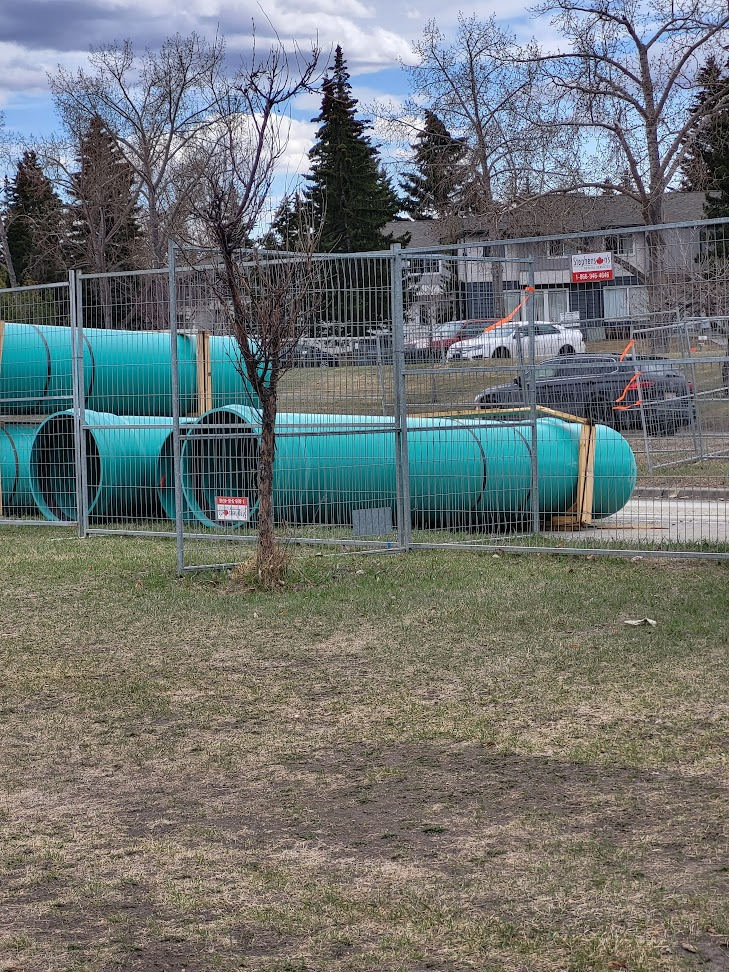
The move to PVC in 1976 from a largely metallic network has helped drive down the break rate. The network is currently about 50 per cent plastic pipe and 50 per cent is a mixture of metallic and concrete.
Five things you might not have known about the city’s water main network Clara Ho • Calgary Herald Published Feb 01, 2015


Prior to 1910, the city used wooden pipes, which are no longer in service. In 1910, the city moved to cast iron until 1968. The AC pipe was introduced in 1955 until 1978. Ductile iron was used from 1963 to 2010. And the PVC came in 1976 and remains in use today.
Five things you might not have known about the city’s water main network Clara Ho • Calgary Herald Published Feb 01, 2015


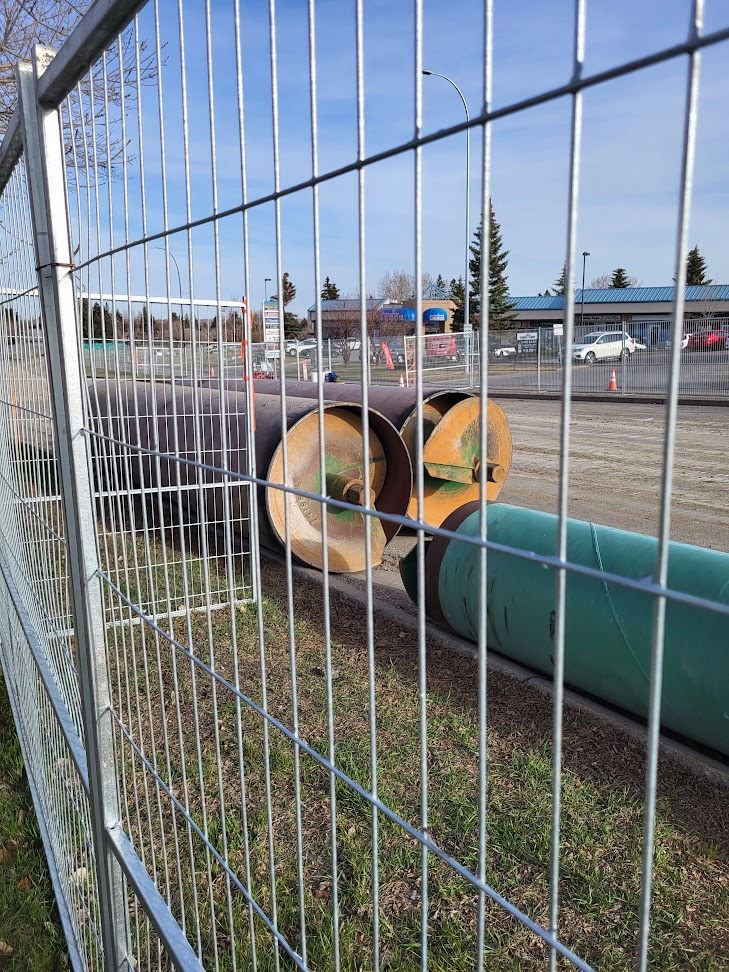
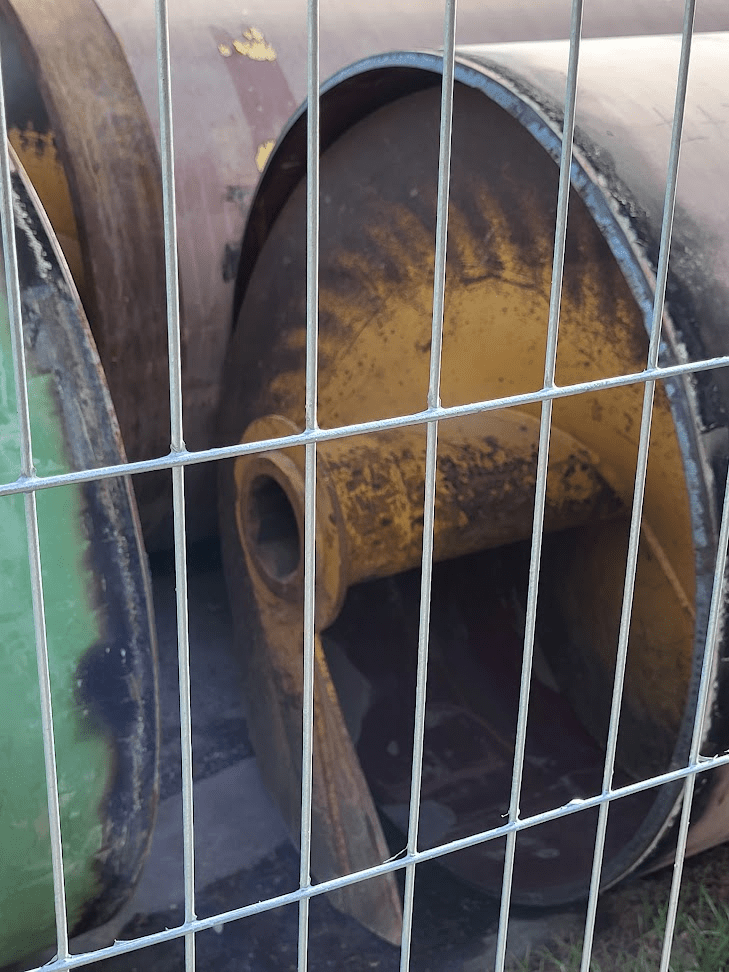
Horizontal Auger Boring.
Horizontal auger boring, also referred to as jack-and-bore is a trenchless method to install steel casing from a launch shaft to a reception shaft with excavation done via a rotating cutterhead driven by a series of augers inside the casing pipe. The excavated material is removed through the auger string that is powered by the auger boring machine in the launch shaft.
https://www.akkerman.com/
The component parts.



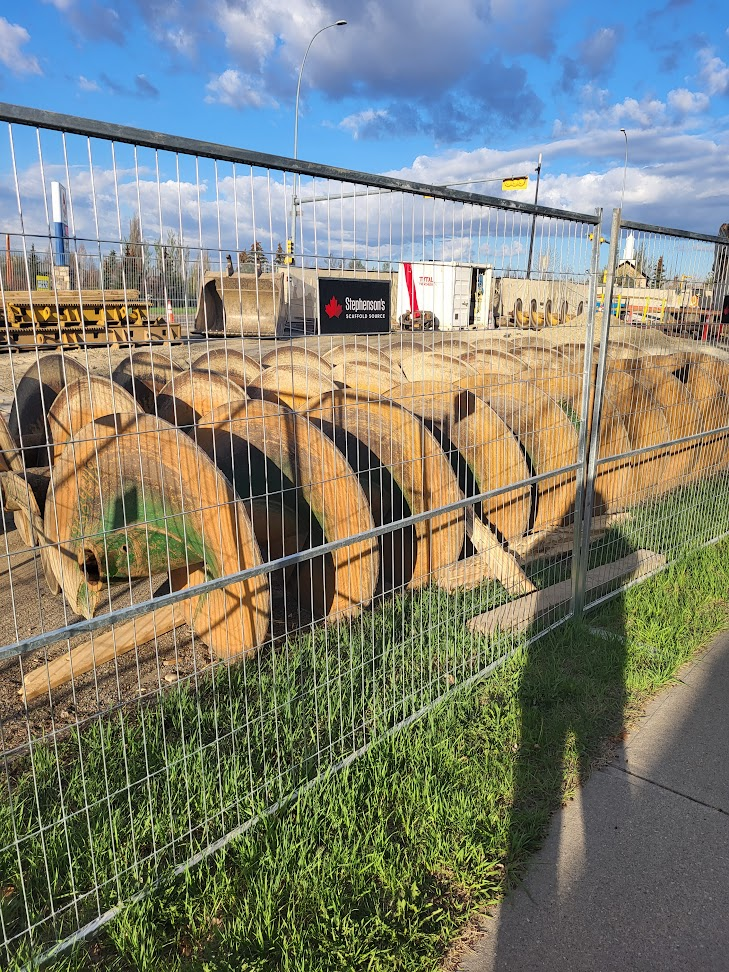
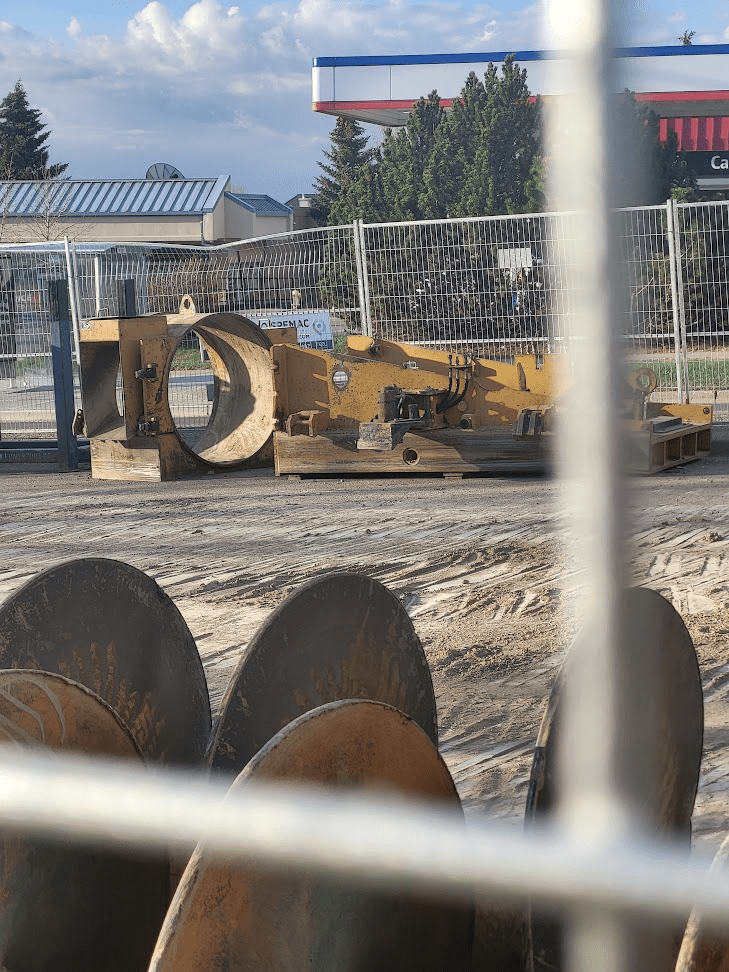
What it looks like at work.

Downhole.
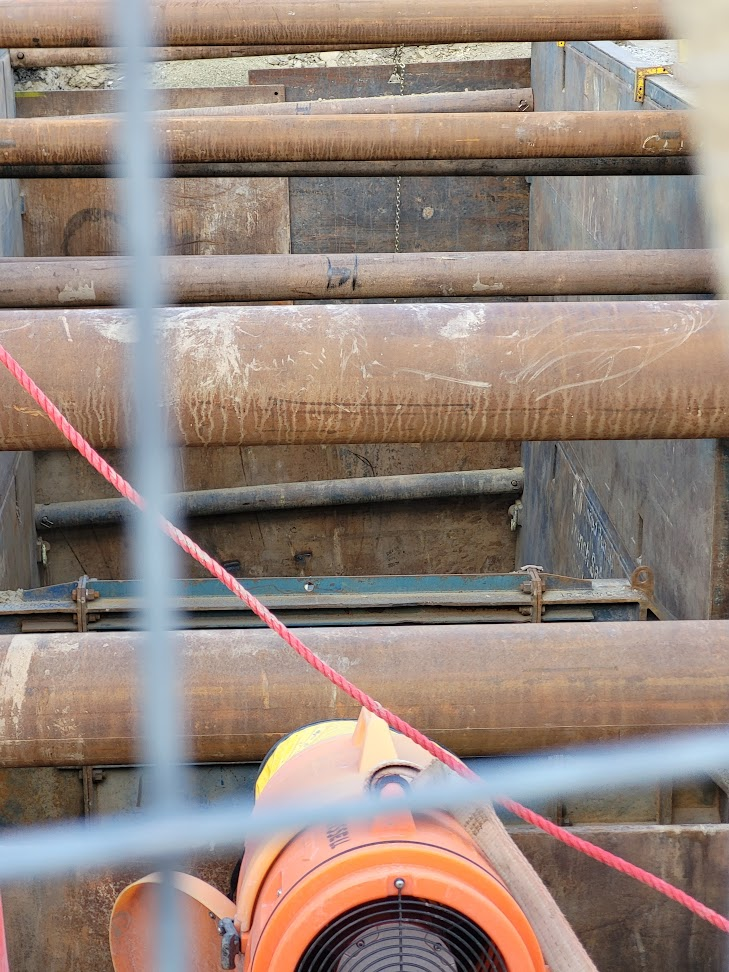
Trenches are dug at opposite ends of the intersection and the tunneling equipment is lowered down the hole.

Ready for insertion.
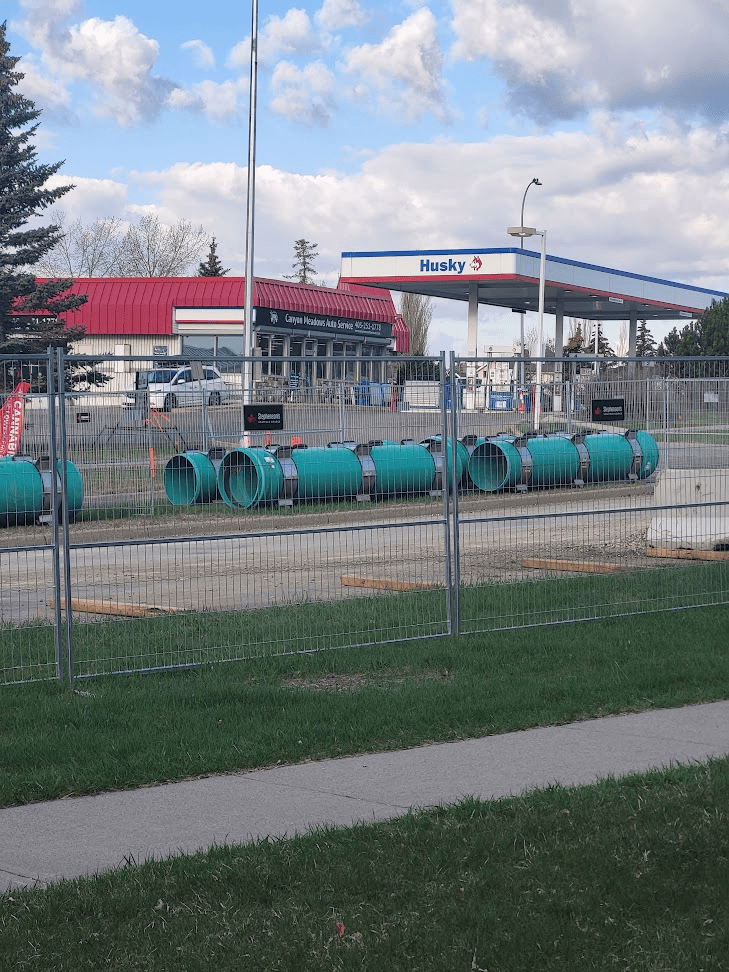
Backfilling with gravel.
This process makes at least as much of an annoying racket as the Track Hoe from Hell.

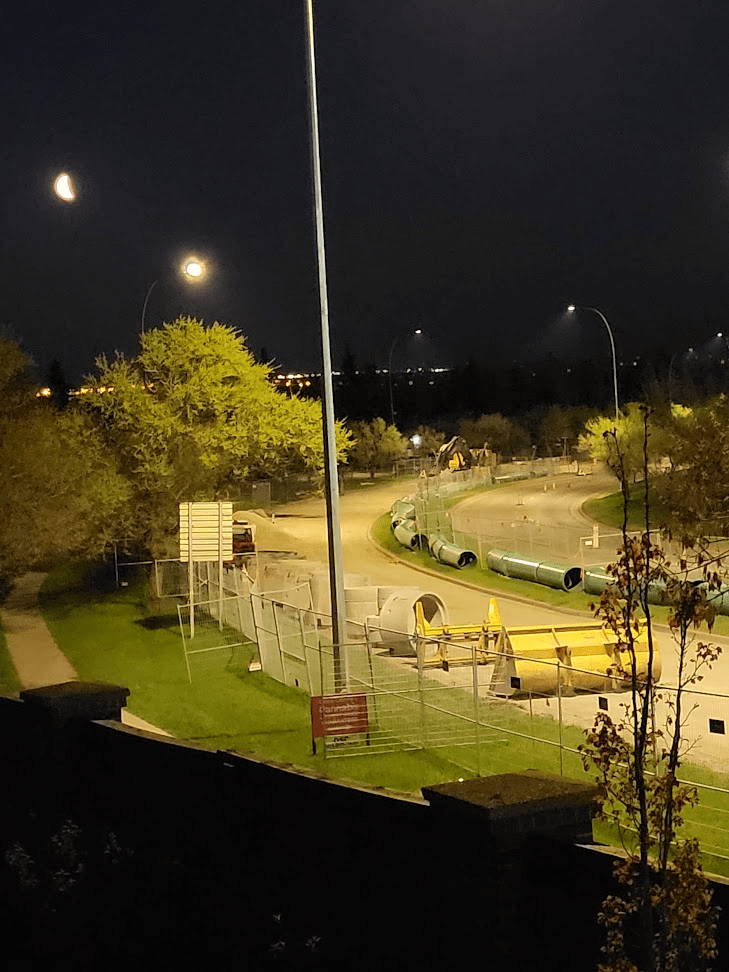
Night and day.


Tearing up the old asphalt.
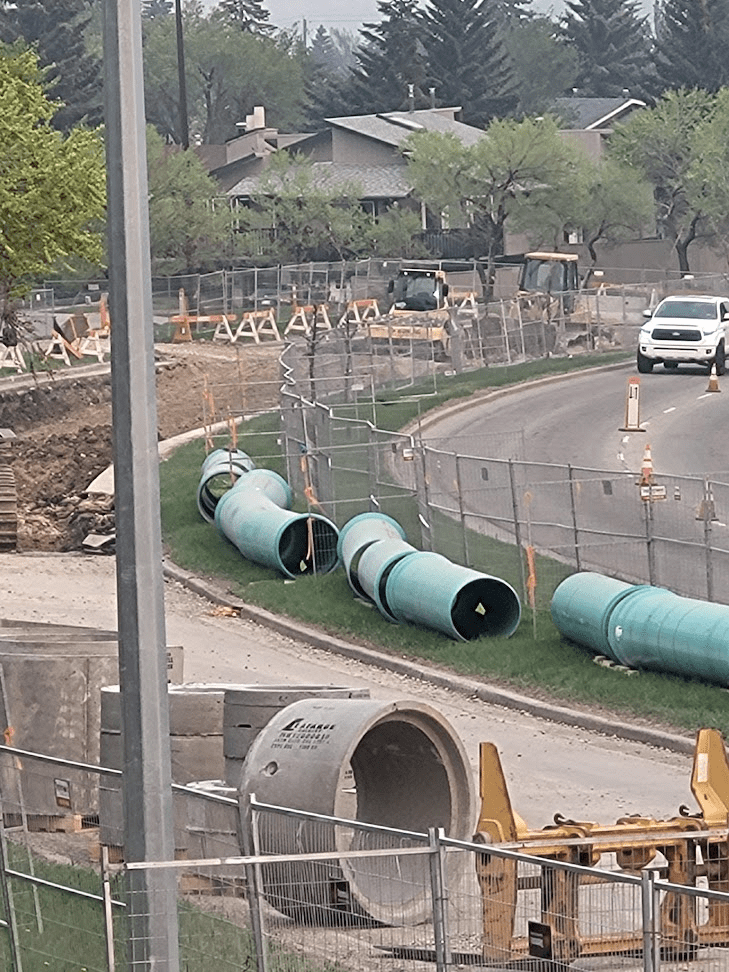

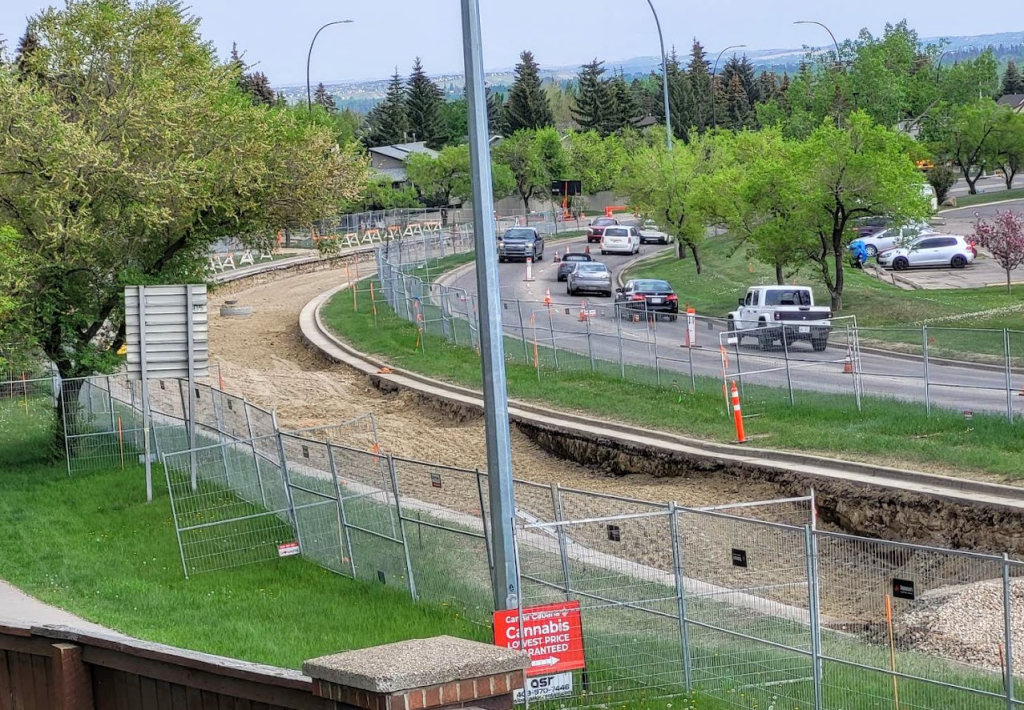

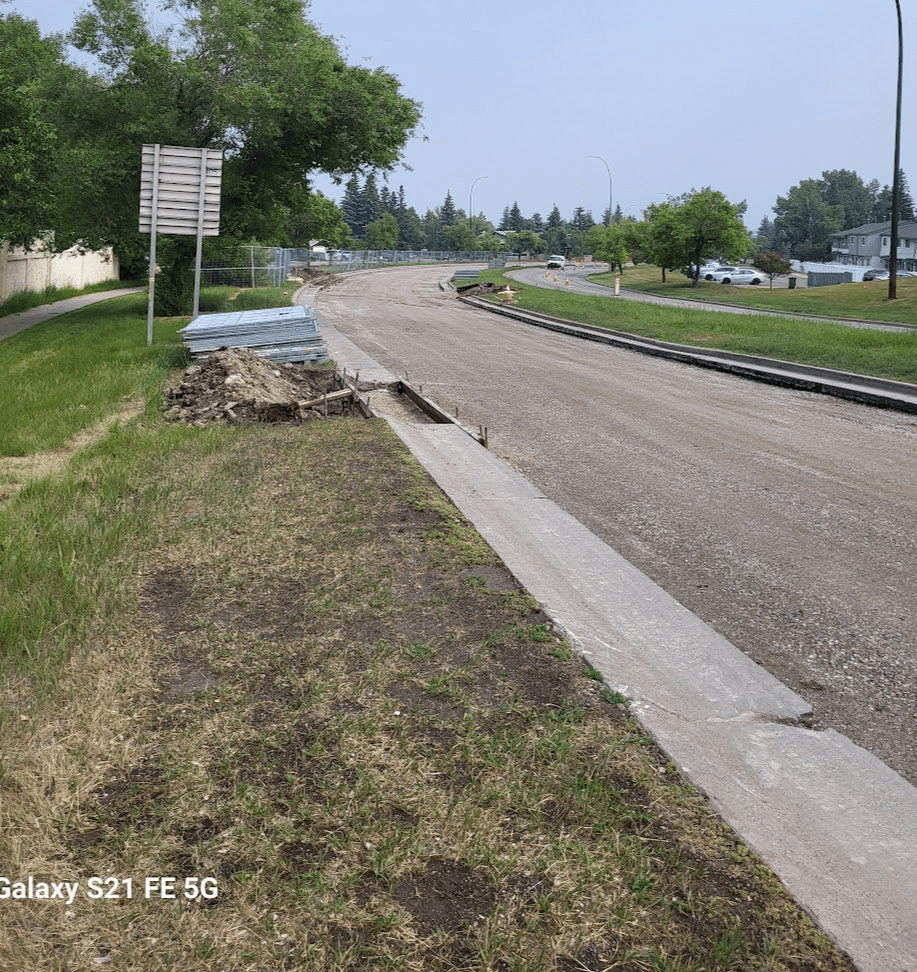
The tie in.

Laying down the road bed.
The pipes are inspected using Non-Destructive Testing (NDT) technology to ensure everything is connected properly and that everything is in good condition prior to laying down the road bed.

The fence starts to come down.
A feeling that the end is in sight as the fencing starts coming down.
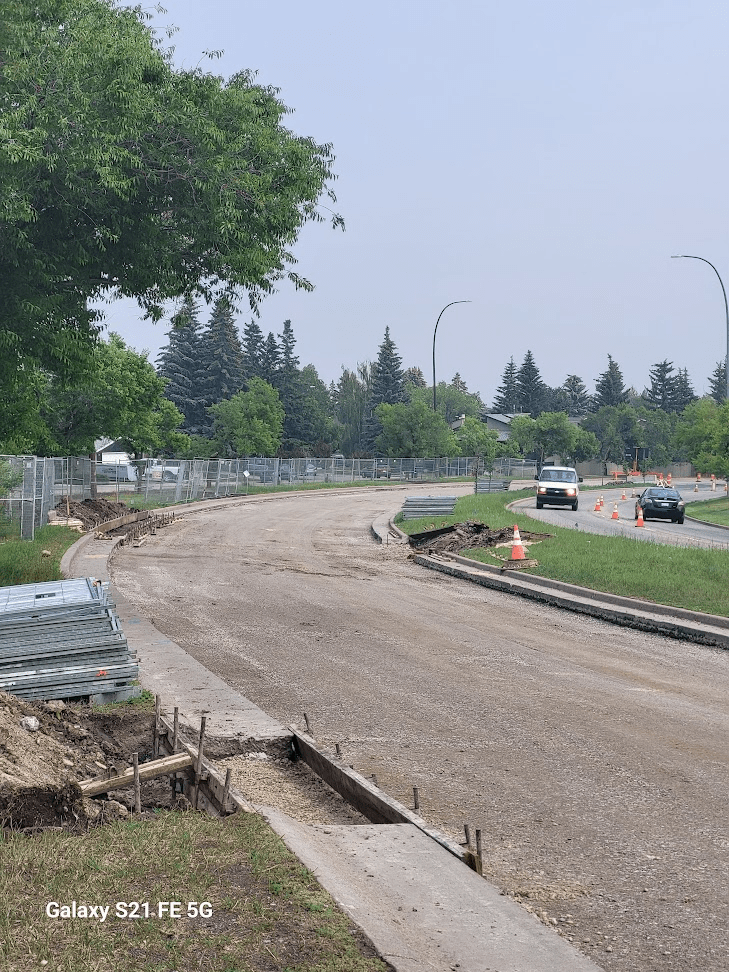


The hot tar gets poured.
Now the road bed is ready for paving.
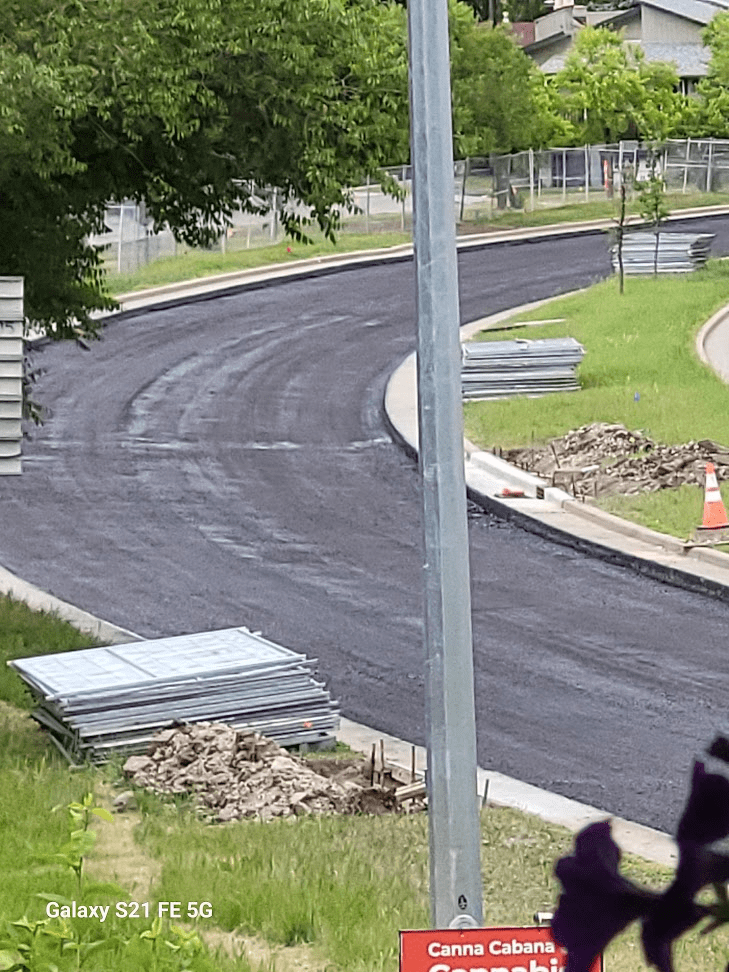
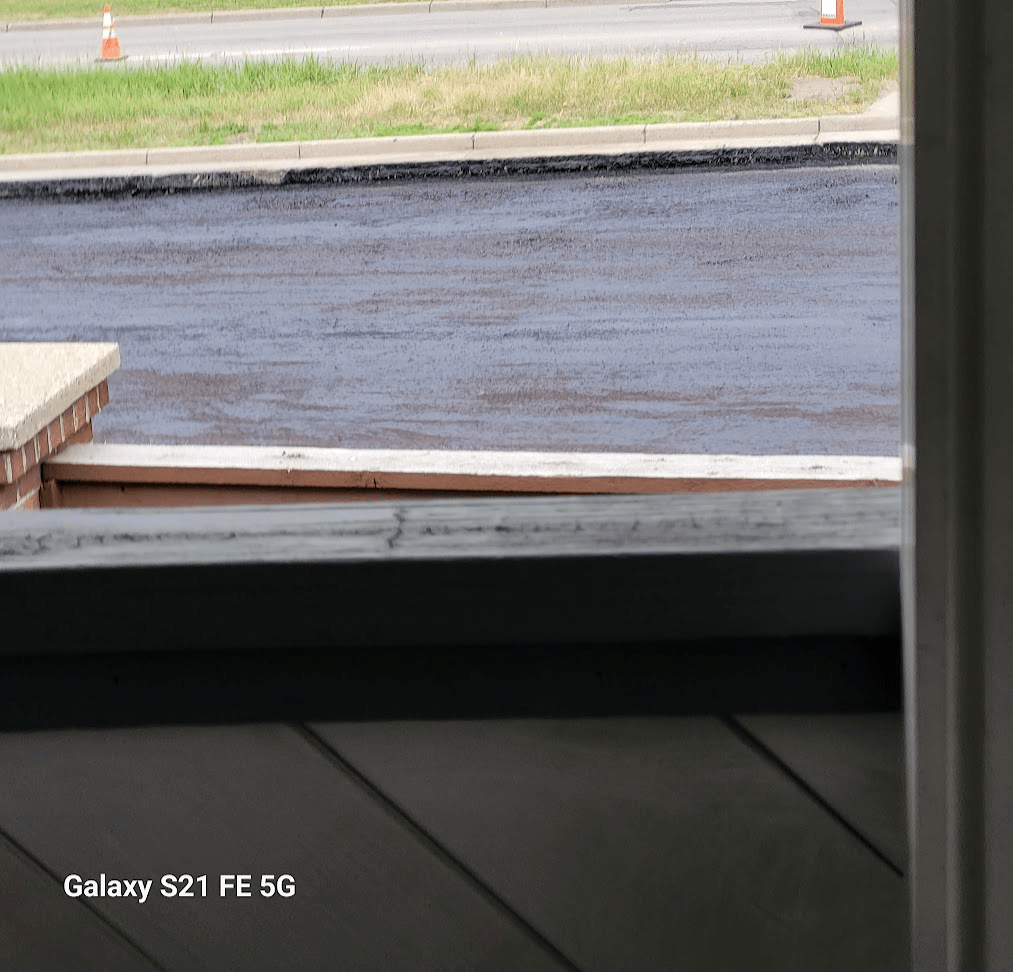

Paving day!!
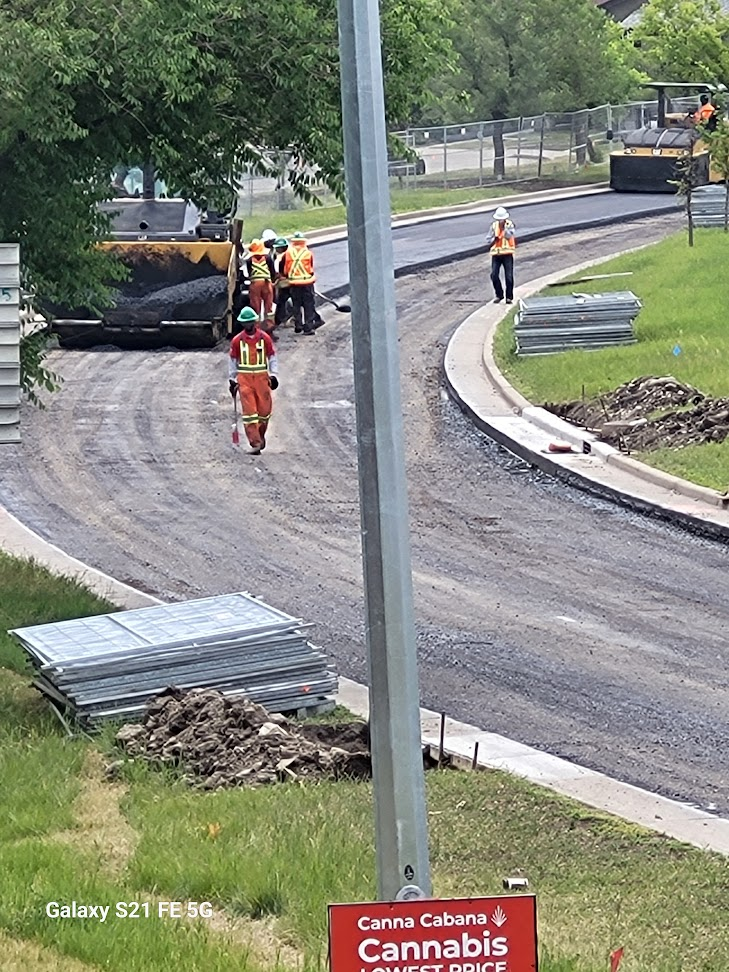
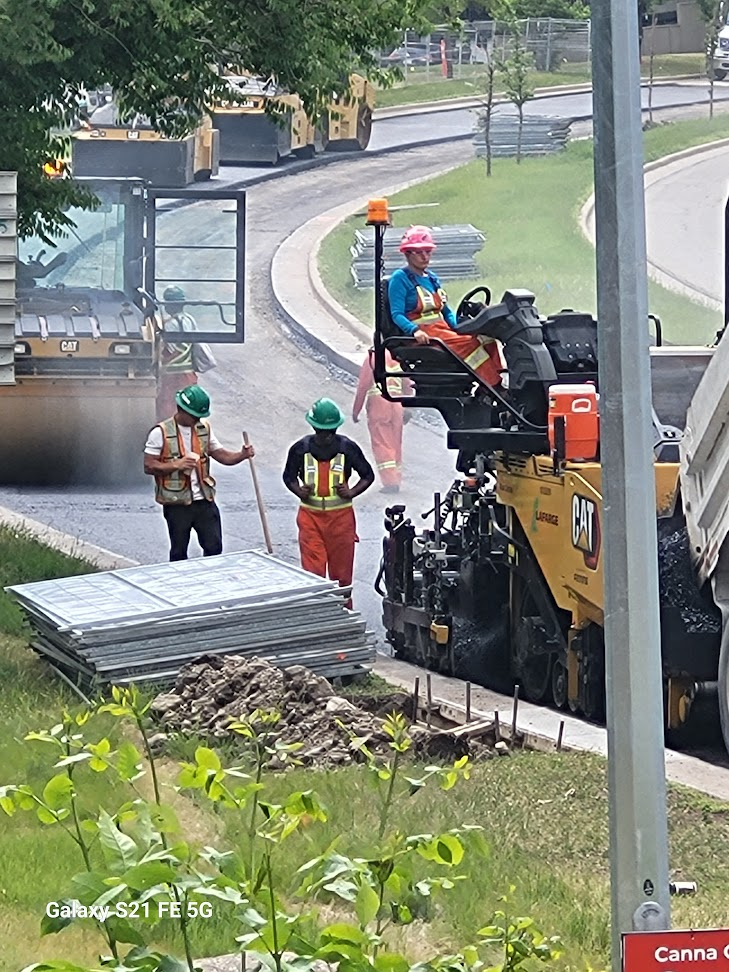


0542 June 23rd – Canyon Meadows Drive re-opens.
The signs start coming down.
Traffic re-opens at 5:42am.
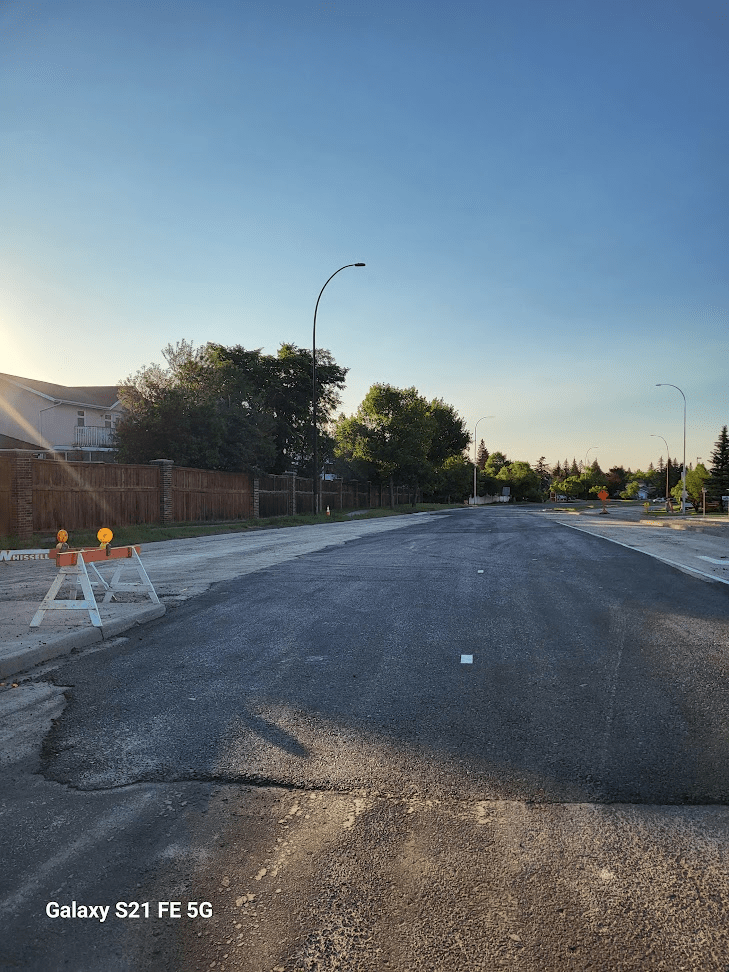
58 days after it began this project is finally in the books, and things can return to their normal state in Canyon Meadows, such as it is.

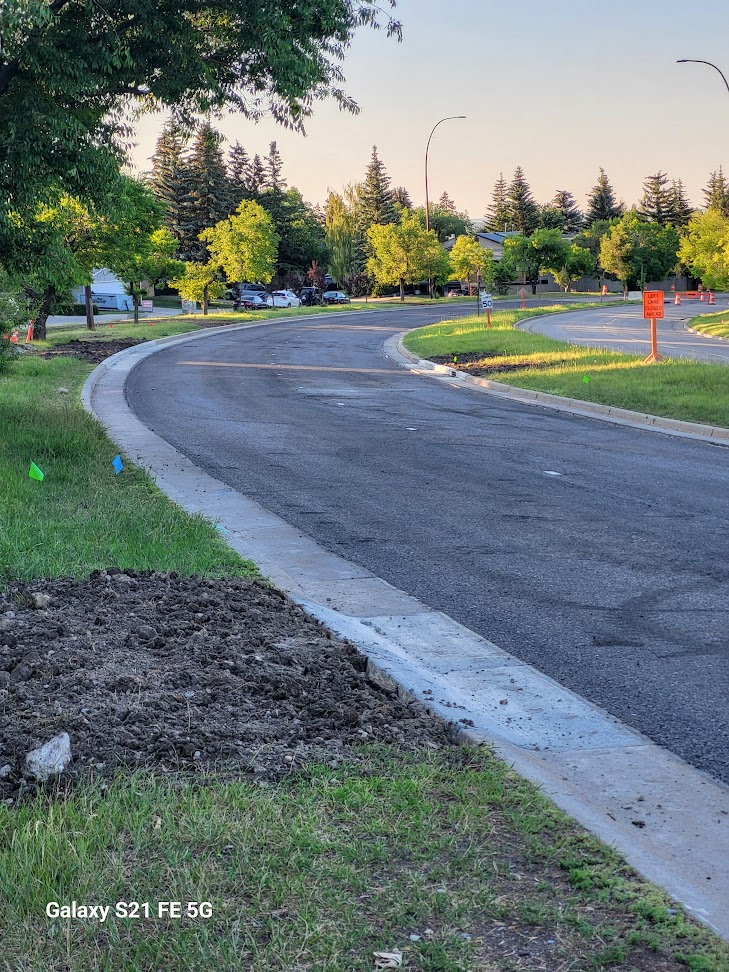


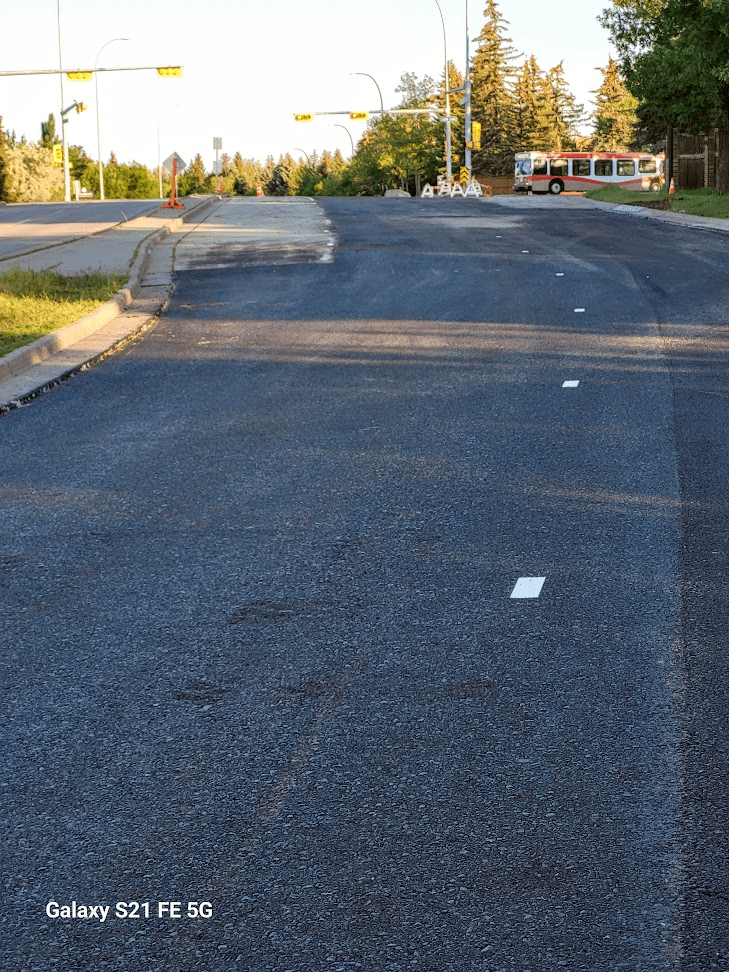
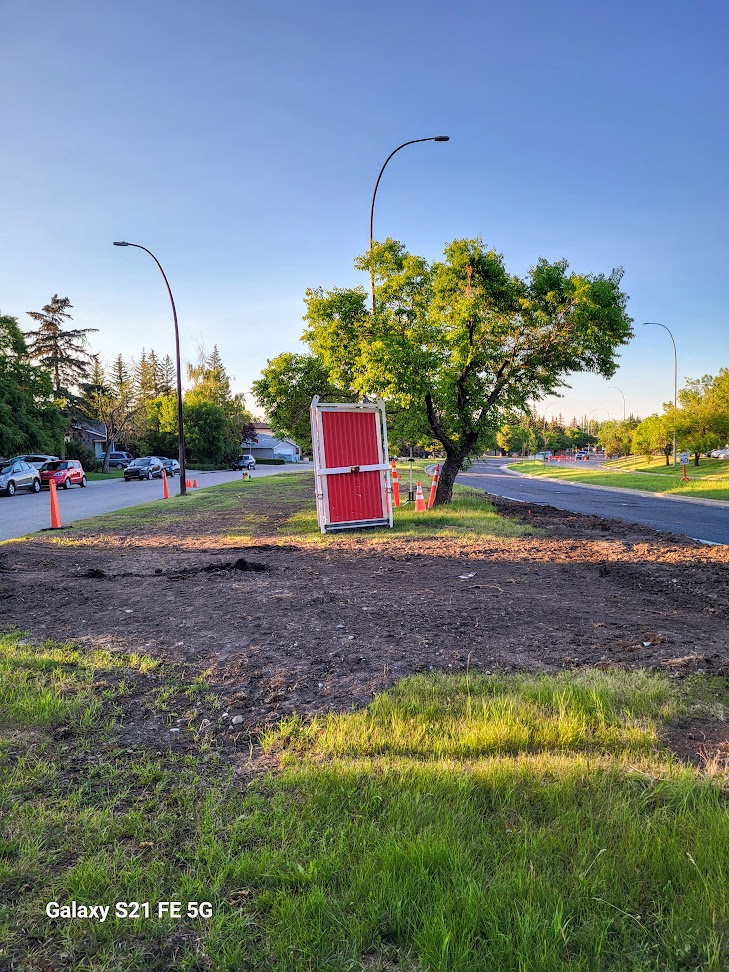
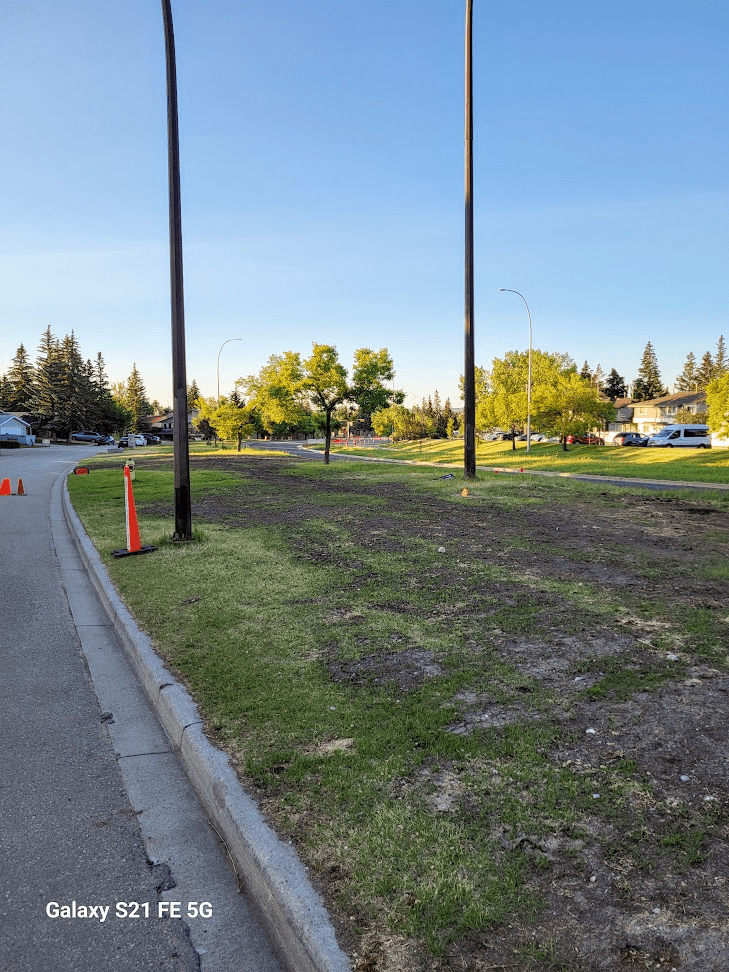
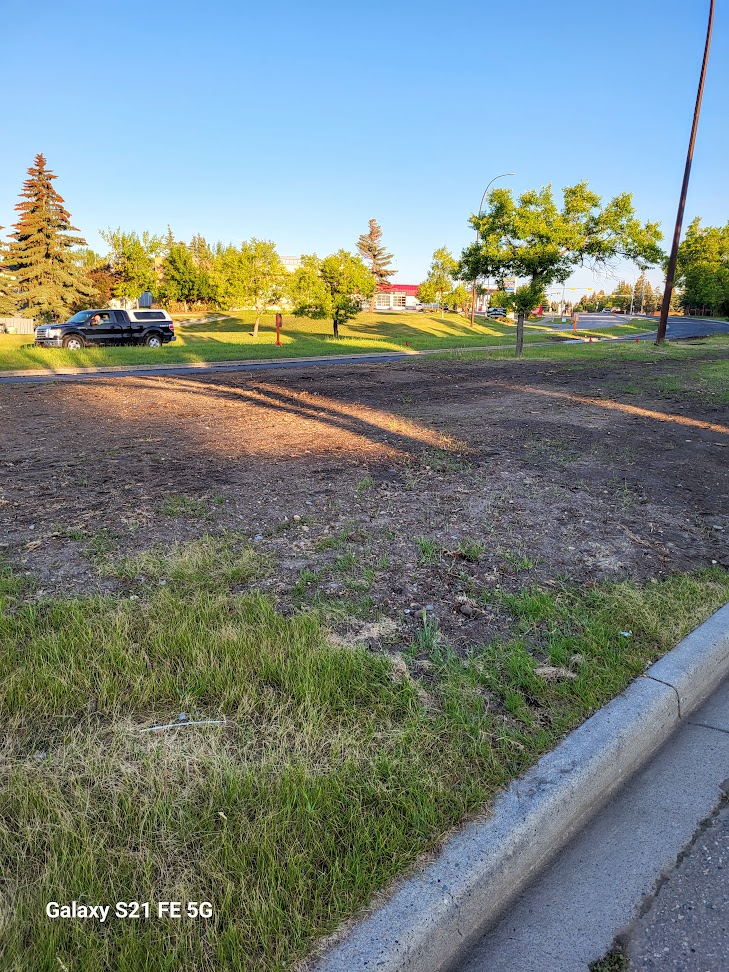


Where the old meets the new.




 The Advocate-Equalizer